High Court to Hear Jury Cases
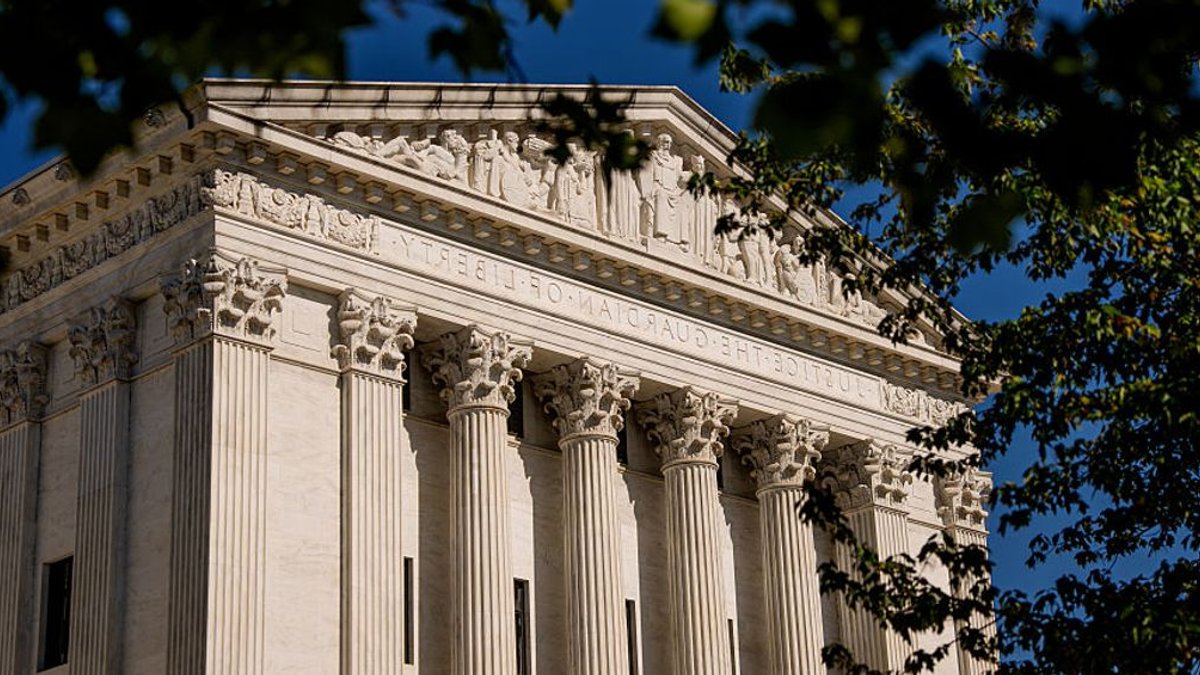
The Supreme Court has agreed to hear three new cases, including a challenge to the constitutionality of six-person juries. The court’s decisions on Monday mark the latest developments in a series of cases that have drawn attention to legal standards, constitutional interpretations, and procedural disputes in criminal and civil law.
In Genalo v. Black, the court will consider whether a defendant’s right to a jury trial under the Sixth Amendment requires a 12-member jury. The case centers on Hamed Kian, who was convicted in a state court under a six-person jury and argued that the 1970 decision in Williams v. Florida, which upheld the use of six-person juries, should be reconsidered. Kian contends that the current court’s 2020 ruling in Ramos v. Louisiana, which emphasized the necessity of a unanimous verdict, undermines the reasoning in Williams. The court’s decision could reshape the balance between jury size and constitutional protections.
Related: Court unanimously sides with defendant in venue dispute over crime location
Another case, Guerrero v. Johnson, involves a technical question about federal post-conviction relief for death-row inmates. Texas sought the court’s guidance on whether a claim of intellectual disability, which would bar execution under the Eighth Amendment, falls within an exception allowing a second petition for relief. The U.S. Court of Appeals for the 5th Circuit had allowed the claim to proceed, citing revised standards for evaluating intellectual disability. The Supreme Court’s ruling on this issue could clarify the procedural boundaries for inmates seeking to challenge their convictions.
Justice Samuel Alito filed dissents in two cases, highlighting areas of legal interpretation he believes require further clarification. In Alabama v. Powell, Alito disagreed with the state court’s ruling that a prosecutor’s comment during a trial violated the defendant’s right against self-incrimination. He argued that the state court’s interpretation conflicted with a 1988 decision, United States v. Robinson, which found no Fifth Amendment violation in similar circumstances. Alito’s dissent emphasized the need for consistency in applying constitutional protections across jurisdictions.
Related: Mastering Content Quality and Accuracy
In a separate dissent, Alito criticized the court’s refusal to hear a challenge to a school’s denial of a student’s request to post pro-life flyers. The case, E.D. v. Noblesville School District, raised questions about whether the First Amendment applies to student-led activities in schools. Alito argued that lower courts had struggled to define the limits of the 1988 Hazelwood School District v. Kuhlmeier ruling, which permits greater restrictions on school-sponsored speech. He suggested the Supreme Court should clarify how Hazelwood interacts with other legal precedents.
The court also denied a petition involving claims about the use of hypnosis in a previous trial. The case, which had been dismissed earlier, centered on whether evidence obtained through hypnosis could be admissible under current legal standards. The denial came after a review of the evidence and arguments presented by both sides.
Related: Mastering Money Matters: Expert Financial Guidance and Advice
Among other denied petitions, the court rejected appeals related to procedural errors in several lower court cases. These included claims of inadequate legal representation and improper jury instructions. The rulings were made after thorough consideration of the evidence and legal arguments.


