NextGen Bar Exam Cancelled in Yakima Due to Technical Issues
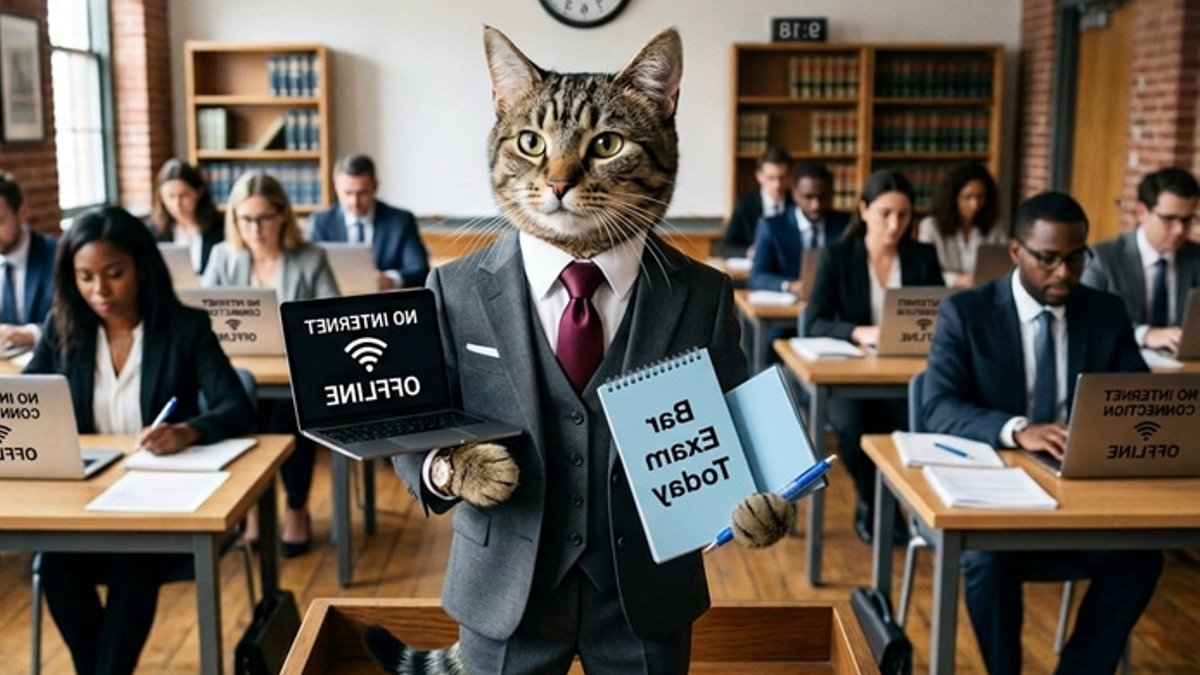
The July 2026 administration of the NextGen Uniform Bar Examination in Yakima, Washington, was marred by significant technical difficulties, forcing the cancellation of the test for the vast majority of participants. The Washington State Bar Association, which oversees the exam, cited bandwidth and connectivity issues as the primary cause of the disruption. This event marked the first time the NextGen UBE was offered, with Washington, four other states, and several territories serving as the initial adopters. While the test ran smoothly in other jurisdictions, the Yakima site experienced widespread failures, leaving hundreds of examinees stranded for hours without knowing whether they would be allowed to complete the exam or when they might be rescheduled.
Hundreds of Future Lawyers Stranded
More than 600 future lawyers traveled to Yakima, a city located east of the Cascade Mountains where the majority of the state’s population resides. Many had booked accommodations and transportation well in advance. When the connectivity problems began, test administrators struggled to maintain the session. Participants reported being stuck in test rooms for extended periods, unable to access the digital interface. In addition to the logistical delays, the test takers were not permitted to leave for lunch during this time. Those who had received test accommodations were able to complete the exam, but the vast majority left without a clear path forward for their licensure.
Read Also: Law Firms Lose Clients at Intake Stage
The Washington State Supreme Court granted diploma privilege licenses to those test takers who had not been granted accommodations and had not failed a previous bar exam or who were not licensed in any other state, provided they passed the ethics exam and met character and fitness standards. Test takers who were eligible for diploma privilege licenses were also given the opportunity to sit for a substitute exam on September 1 and 2 if they wanted a license that would be acknowledged by other states. Those who were not eligible for the diploma privilege license will be able to credit their payments for the July exam toward the February 2027 exam.
Shifting Back to Paper in Law Schools
This digital disruption stands in contrast to the traditional bar exam experience, which relies on physical materials like blue books and legal-sized answer sheets. Cohodes reflects on her own examinations in 1986 and 1993, recalling her preparation of specific pens and erasers. The author notes that while a total loss of physical materials would be disastrous, the complexity of the current testing infrastructure-dependent entirely on Wi-Fi-creates far more opportunities for failure than the pen-and-paper methods of the past. Law schools are taking notice, too. The University of Chicago, UC Berkeley, UT Austin, and now Columbia have all instituted policies to decrease the use of laptops and other devices in classes or on tests, bringing students back to paper.
Read Also: Law firms struggle with AI adoption despite workflow flaws
More than 40 other jurisdictions are adopting the new test, to be rolled out between July 2026 and July 2028. More than 40 jurisdictions are scheduled to adopt the new test format during this period. The National Conference of Bar Examiners (NCBE) has been working on improving and streamlining the uniform bar exam for the past eight years. However, the specific location of the Yakima testing center in an area with lower population density appears to have contributed to the infrastructure failure. The NCBE may adjust protocols for future locations to ensure adequate bandwidth is available at each site.


