ICAM demands uniform criteria for immigration cases
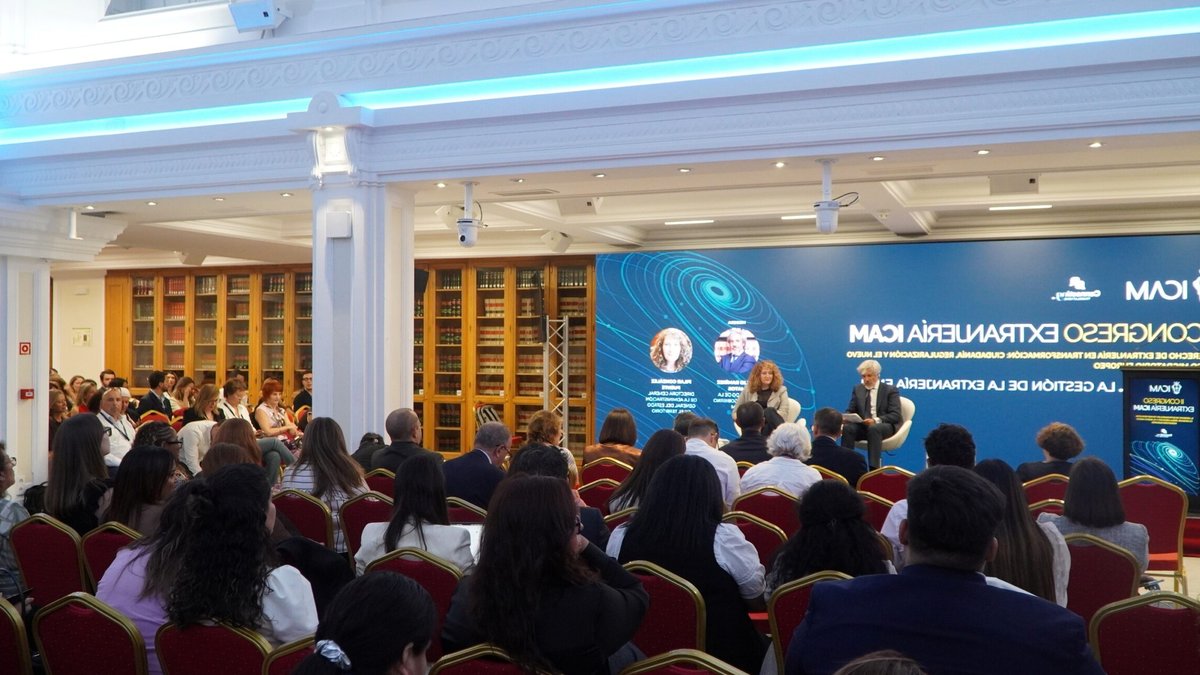
The Ilustre Colegio de la Abogacía de Madrid (ICAM) has called for standardized procedures, automated scheduling, and stronger coordination between agencies to improve legal certainty in immigration matters. After three days of discussions at its second Extranjería Congress, the organization outlined key demands aimed at streamlining administrative processes while protecting rights. The gathering attracted representatives of the administration, the judiciary, the legal profession and specialized organizations who shared a common interest in reducing procedural uncertainty.
The proposals focus on eliminating inconsistencies in how immigration cases are handled across regions and offices. The ICAM argues that current practices often lead to different outcomes for identical situations, depending on where or with whom a case is processed. By establishing uniform criteria, the college hopes to create a predictable environment that reduces the need for repeated appeals and costly legal interventions.
Emilio Ramírez, the ICAM’s deputy in charge of immigration, stressed that efficiency and legal protections are not opposing goals. “An agile, coordinated administration that provides predictable responses delivers security for both foreigners and the professionals assisting them,” he said. He emphasized that the college sees its role as a bridge between lawyers and institutions, ensuring problems are identified early and solutions are implemented.
Strengthening Lawyer-Agency Communication
The need for homogeneous criteria extends to how immigration authorities communicate with legal representatives. The ICAM wants to strengthen the 2020 agreement between the government and the Consejo General de la Abogacía Española, updated in 2024, to create permanent, two-way channels. This would help reduce errors in document submissions and speed up clarifications on procedural requirements, allowing attorneys to advise clients with greater confidence.
Read Also: Court orders insurer to provide Burosumab to child
One of the most immediate pain points highlighted was the difficulty in securing appointments for fingerprinting—a step required after approval but often delayed. The organization proposed tying these appointments directly to approval notifications, eliminating manual scheduling and cutting down on unnecessary costs for applicants. While the government’s Pilar González Puente, director general of state administration, acknowledged progress in automating the system, she noted it isn’t yet fully operational nationwide, including in Madrid, and that further investment is needed to reach all regional offices.
Tackling Inter-Agency Coordination Gaps
Beyond scheduling, the college pointed to broader issues in interagency coordination. Immigration cases frequently involve multiple bodies, Extranjería offices, police, consulates, social security, and employment services, whose disjointed systems force applicants and lawyers to repeatedly provide the same documentation. The ICAM wants stable information-sharing channels, particularly with civil registries, to reduce administrative burdens and prevent redundant paperwork that slows down case resolution.
Looking ahead, the college warned that the workload from the recent extraordinary regularization won’t end when approvals are granted. Starting in 2027, those granted status will need renewals and extensions, and the organization urged the government to preemptively address potential backlogs.
Balancing Automation with Rights
The push for digitalization was a recurring theme, but with a clear caveat: efficiency must not come at the expense of accessibility or individual rights. The ICAM supported automation in routine tasks but insisted that decisions, particularly those involving criminal records, family situations, or child protection, must still be evaluated case by case. Weak justification in administrative rulings remains a persistent issue, and participants agreed that stronger motivations in resolutions are needed to protect vulnerable applicants.


