India Must Share Water with Pakistan
The Permanent Court of Arbitration (PCA) has ordered India to honor a nearly 70-year-old water treaty with Pakistan, in a decision that is being hailed as a significant win for Pakistan. The court ruled that the treaty remains legally binding and that no party may unilaterally suspend or terminate it.
The PCA’s decision comes after Pakistan commenced arbitral proceedings against India in August 2016, concerning objections over two major hydroelectric plants, the Ratle on the Chenab River and the Kishanganga on the Jhelum River. Pakistan’s Request for Arbitration submitted to the PCA under the 1960 Indus Waters Treaty framework states that India’s actions violate the specific restrictions placed on its hydroelectric use of the Western Rivers.
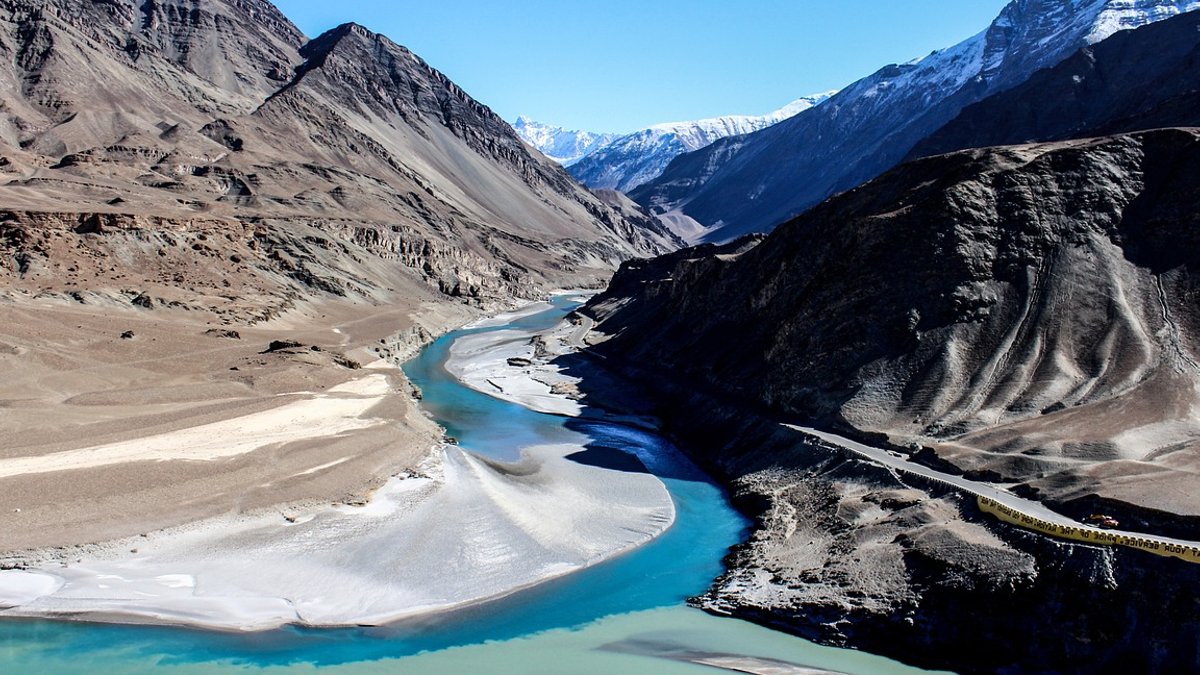
The Indus Waters Treaty was brokered by the World Bank and has been hailed as a successful transboundary water-sharing treaty between two hostile countries. It allocates waters of the eastern Ravi, Sutlej and Beas Rivers to India and most of the waters from the western Indus, Jhelum and Chenab rivers to Pakistan.
The treaty established a unique legal regime for dividing and managing flows of water from the Indus system of rivers, taking into account the historical, political, and geographical realities of the Indus basin. However, India and Pakistan have long been in conflict over the territory of Kashmir, through which the Indus flows from its Himalayan headwaters, and where its tributary the Jhelum originates.
The PCA ruled that India must pause construction of the Ratle Hydro-Electric Plant pending a review, and prohibited India from raising the dam above a certain level. Additionally, the PCA required India to notify the court, the government of Pakistan, and a presiding neutral expert of any changes to the plant’s construction schedule.
The court also rejected India’s decision to hold the treaty “in abeyance” due to the 2025 attack in India-administered Jammu and Kashmir, which precipitated renewed armed conflict with Pakistan. The court said that the “in abeyance” decision could only mean that India has unilaterally suspended or terminated the treaty, which was not authorized by any provision therein.
India has explicitly rejected the authority of the PCA in the matter, and the decision is likely to further escalate tensions between the two countries. The conflict between India and Pakistan over the territory of Kashmir has been ongoing for decades, and the dispute over the Indus Waters Treaty is just one aspect of the larger conflict.
Related: Iraq silent on $76 billion as no law demands answers
The PCA’s decision has significant implications for the region. The fact that the court has ruled in favor of Pakistan suggests that the treaty remains an important framework for managing the shared water resources of the Indus basin. However, India’s rejection of the PCA’s authority and the ongoing conflict over Kashmir mean that the situation remains uncertain and potentially volatile.
India is permitted to use the waters of the Western Rivers for hydroelectric power generation, but that such use is strictly limited and subject to various constraints on the “design and operation” of power plants. This decision is being seen as an impediment to Indian hydro-hegemony, and supporters of Pakistan’s position are hailing it as a significant victory.
As the situation continues to unfold, the 1960 Indus Waters Treaty is worth examining in more detail. The treaty has been successful in managing the shared water resources of the Indus basin, but there are still significant challenges to be addressed. The PCA’s decision is an important step towards resolving the dispute, but it is unlikely to be the last word on the matter.
Reporters on the scene note that the decision will have far-reaching consequences for the region. The reparations legal architecture in similar cases may provide insight into the potential outcomes of this dispute.
India and Pakistan must now handle the implications of the PCA’s decision. They will need to find a way to manage the shared water resources of the Indus basin in a manner that respects the treaty and addresses the concerns of both countries.
The outcome of this dispute will depend on the actions of India and Pakistan in the coming months. They must work together to find a solution that is acceptable to both parties and that respects the terms of the treaty.
The situation remains uncertain.


