Lawyer to Marwan Barghouti Tells His Story
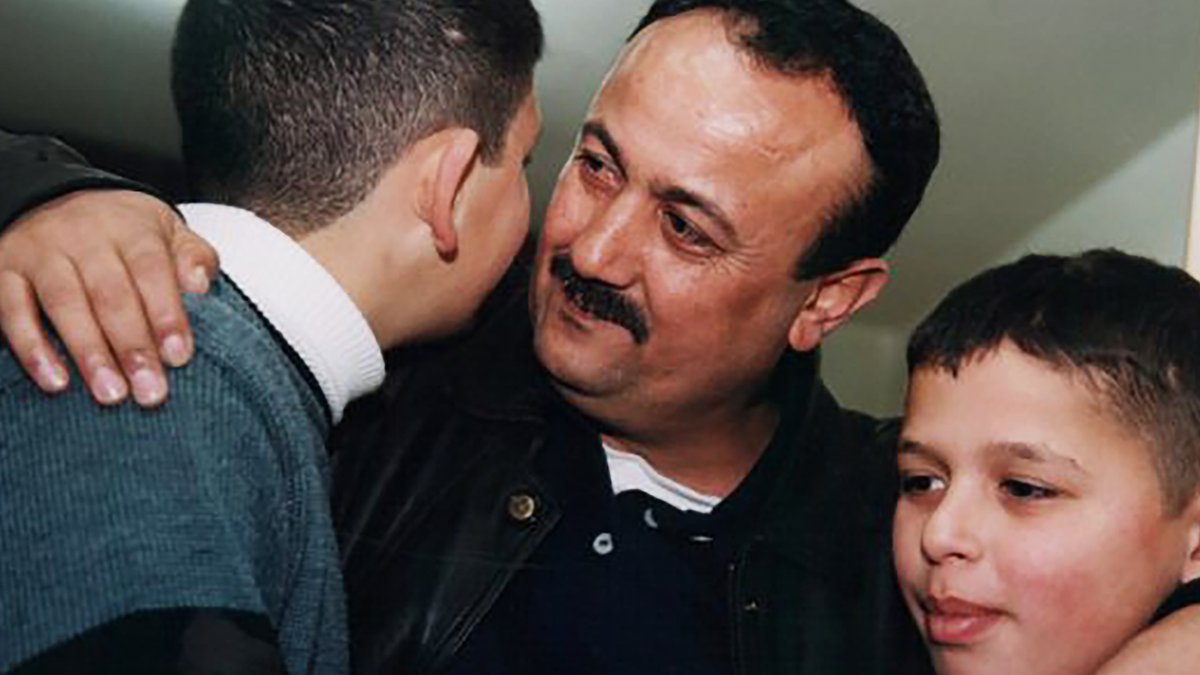
Marwan Barghouti has spent more than two decades behind bars. Born in 1959 in the West Bank village of Kobar, Barghouti rose from student activist to a leading figure in Palestinian political life—a vocal proponent of the two-state solution, he was elected to the Palestinian Legislative Council in 1996 and known for his ability to bring consensus among rival Palestinian factions. Israeli authorities arrested him in 2002, during the Second Intifada; he was subsequently sentenced to five life terms plus 40 years following his 2004 conviction on five counts of murder and one of attempted murder for directing attacks led by the Tanzim militant group.
Barghouti refused to mount a defense, rejecting the jurisdiction of an Israeli court over a Palestinian resident of the occupied West Bank, and in 2004 was convicted and sentenced to five life terms plus forty years. Comparisons to Nelson Mandela have followed him ever since. Like Mandela, Barghouti politically leads from prison, commanding a legitimacy that incarceration has not diminished.
A Palestinian Center for Policy and Survey Research poll conducted in October 2025 found that he would win 49 percent of the vote in a three-way presidential race and 58 percent in a head-to-head contest against Hamas’ Khalid Mishal. Barghouti’s support of a two-state solution was most notable upon his co-authoring of the Palestinian Prisoners’ Document in 2006, in which jailed leaders of rival factions agreed to the framework of a Palestinian state within the 1967 borders.
Former Israeli head of intelligence, Ami Ayalon, described Barghouti as “the only leader who can lead Palestinians to a state alongside Israel.”
Related: Banks and Fintechs Share Regulatory Risks
Since October 7, 2023, Barghouti—now age 66—has been held in solitary confinement and, according to his lawyer, subjected to a pattern of escalating physical abuse. In this interview, JURIST’s Senior Editor for Long-Form Content, Pitasanna Shanmugathas, spoke with Ben Marmarelli, an Israeli lawyer who is the legal representative of Marwan Barghouti and a vocal critic of Zionism.
Marmarelli speaks candidly about the beatings Barghouti has endured, the starvation and deprivation facing Palestinian political prisoners more broadly, what he describes as the systematic use of sexual violence against prisoners as policy, the Israeli legal system’s treatment of Palestinians in military courts, and why virtually no other Israeli lawyer is willing to talk about any of it.
Pitasanna Shanmugathas asked Marmarelli about his personal evolution in political thinking, and Marmarelli replied that he was not always critical of Zionism.
Marmarelli reported that during his visit, he confirmed that Marwan Barghouti had been subjected to violent assaults.
Marmarelli also alleged systematic sexual abuse of Palestinian prisoners.
Related: Color for Safety Not a Trademark
The Israeli parliament recently approved the death penalty for Palestinians convicted of murdering Israelis. Marmarelli stated that this law cannot apply retroactively to Marwan Barghouti, as his case was decided over twenty years ago.
Marmarelli believes that lawyers within the Israeli legal profession should be doing more to speak out against the torture, sexual abuse, and killings of Palestinian prisoners. He urges them to tell the world about the situation and to be brave in the face of intimidation from the state.
For law students entering the profession, Marmarelli advises them to study sociology and to be prepared to stand their ground in the face of adversity. He believes that fighting for justice means accepting that the state will fight back, and that lawyers should be prepared to face this challenge.
Marmarelli’s comments come as a global campaign for Marwan Barghouti’s release continues. Despite his conviction and sentencing, Barghouti remains a prominent figure in Palestinian politics, and his release is seen by many as a key step towards a peaceful resolution to the conflict, much like the need for city planners to have a say in the development of their cities.


